

There are moments in Bali when you feel the island pause—take a breath—and try to recalibrate. Yesterday was one of those moments.
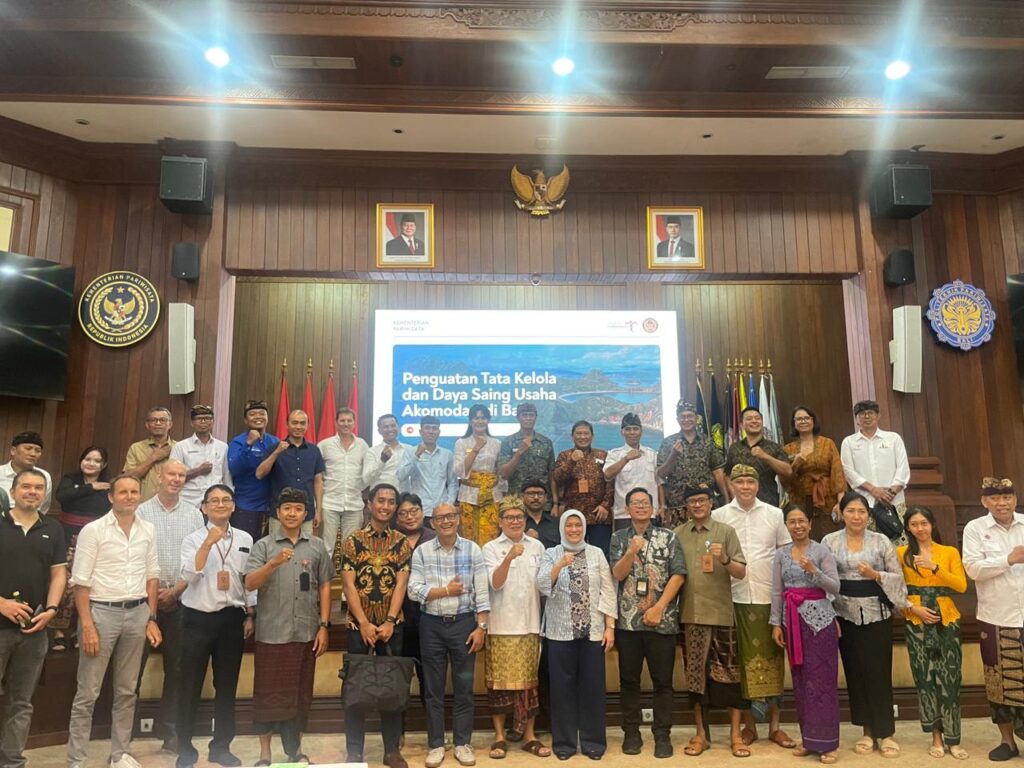
In a room filled with representatives from the Ministry of Tourism, provincial authorities, the tax office, BKPM, tourism associations, and many of Bali’s largest villa operators, something shifted.
The meeting, held under the newly formed FORMASI forum, was not about pointing fingers. It was about facing reality—together. And perhaps for the first time in a long while, it didn’t feel like two sides of a table. It felt like one.
Acknowledging the Problem We All Know Exists
No one in the room denied the challenges. Illegal operations are widespread. Permits are complex—sometimes unclear, sometimes inconsistently applied.
The gap between central systems like OSS and local implementation is still very real. And tax compliance remains a major concern for the government.
These are not new issues. But what was different was the tone. There was no defensiveness. No denial. Just a shared understanding that Bali’s growth—especially in the non-resort accommodation sector—has outpaced the systems meant to regulate it. And now, the system is catching up.
The Question of KBLI: Clarity Over Restriction
A central part of the discussion revolved around the different business classifications—KBLIs—that have become both a tool and, in some cases, a source of confusion.
From tourism accommodation classifications (such as hotel or apartment categories), to management structures like 55900, and even the often-debated 68111, the message was clear: The issue is not that these classifications exist. The issue is how they are being used.
Rather than removing KBLIs—which could create even greater legal uncertainty—the Ministry of Tourism signaled a more constructive approach: providing clearer guidance on how ownership structures and operational licensing should work together.
For many in the room, this was a welcome shift. Because Bali doesn’t need fewer options. It needs better understanding.
A Turning Point: NIB for Every Owner
One of the most important takeaways from the meeting was also one of the most direct. All owners of short-term rental properties will need their own NIB (Business Identification Number).
For years, this has been a grey area—handled in different ways depending on advisors, structures, and interpretations.
Now, it is becoming clear: Whether individually or through a properly structured entity, each owner will need to formalize their position within the system.
It is a significant shift. And for many, it will require restructuring. But it also brings something the market has been missing for a long time: clarity.
The Need for One Voice
A surprisingly honest moment came when the conversation turned inward. Across consultants, notaries, and even institutions, the level of advice in the market is not always aligned.
And for investors—especially foreign investors—this creates confusion, risk, and in some cases, unintended non-compliance. The message was simple, but important: If Bali is to move forward, the ecosystem advising investors must move forward together. Clarity from the top must be matched by consistency on the ground.
A System That Is No Longer Looking Away
The tax authority made it clear: the government understands what is happening in the market. This is not a matter of discovering the problem. It is a matter of addressing it.
With increasing integration between systems and more active enforcement teams, the space for operating “under the radar” is closing. Not overnight. But steadily.
For serious investors, this may not be a threat. It may, in fact, be a long-overdue step toward a more stable and professional market.
The Market Is Already Responding
Data shared during the meeting indicated that property transactions in early 2026 have dropped by over 40 percent. On the surface, this raises concern. But within the room, the reflection was more nuanced.
A slowdown in new developments—after years of rapid expansion—may not necessarily be negative. It could allow the market to absorb, recalibrate, and improve in quality.
The real concern lies elsewhere: maintaining confidence in Bali as an investment destination. Because without that confidence, the broader ecosystem—from construction to employment to community development—begins to feel the impact.
Beyond Compliance: The Bali We Want to Build
What stood out most was not the technical discussions. It was the shared vision. A Bali that is cleaner. More sustainable. Better managed. And more deeply connected to its cultural foundation.
Aligned with the philosophy of “Nangun Sat Kerthi Loka Bali”—a reminder that development must exist in harmony with nature, culture, and community. This is not a quick fix. It is a long-term process. And it requires cooperation.
A Work in Progress—Together
A working group has now been established to continue this dialogue and move toward practical solutions. From the side of BTIC and many in the private sector, one thing is clear: The conversation must expand.
Not in the form of complaints or resistance, but through constructive input from those who are actively investing, building, and operating in Bali.
Because if this meeting showed anything, it is this:
Bali does not lack regulation.
Bali does not lack opportunity.
What Bali has lacked—until now—is alignment. And perhaps, slowly but surely, that is beginning to change.
How BTIC Can Help
Through Bali Tourism & Investment Chamber, efforts are already underway to bridge the exact gaps highlighted in this meeting. BTIC’s role is not to replace regulation—but to support understanding, alignment, and ongoing dialogue between:
▪ Government institutions
▪ Industry operators
▪ Investors navigating the market
This includes:
▪ Supporting regulatory socialization and clearer interpretation of frameworks like KBLI and OSS
▪ Creating feedback loops—bringing real challenges from the ground back to policymakers
▪ Facilitating forums and working groups, such as FORMASI
▪ Promoting a more transparent, sustainable, and competitive Bali
This is a shared journey. And if there is one thing that became clear in that room, it is this: Progress will not come from enforcement alone. It will come from alignment.
For investors, operators, and stakeholders in Bali’s tourism and property sectors, your voice matters. The door is open. The conversation has started. Now it needs to continue.