

Is 2026 a good time to buy property in Bali? The answer depends on more than property prices alone.
This year, investors are also weighing stronger tourism numbers, changing regulations, rental performance, and an increasingly competitive market.
The latest Q1 2026 market data provides a much clearer picture of where Bali’s property market is heading—and what that could mean for investors planning their next purchase.
Bali Property Market Snapshot: What the Q1 2026 Data Shows
The latest Q1 2026 figures suggest Bali’s property market remains resilient despite tighter regulations and a growing supply of accommodation.
While the pace of growth has become more measured than the post-pandemic boom, several key indicators continue to point toward healthy market fundamentals. Some of the most notable highlights include:
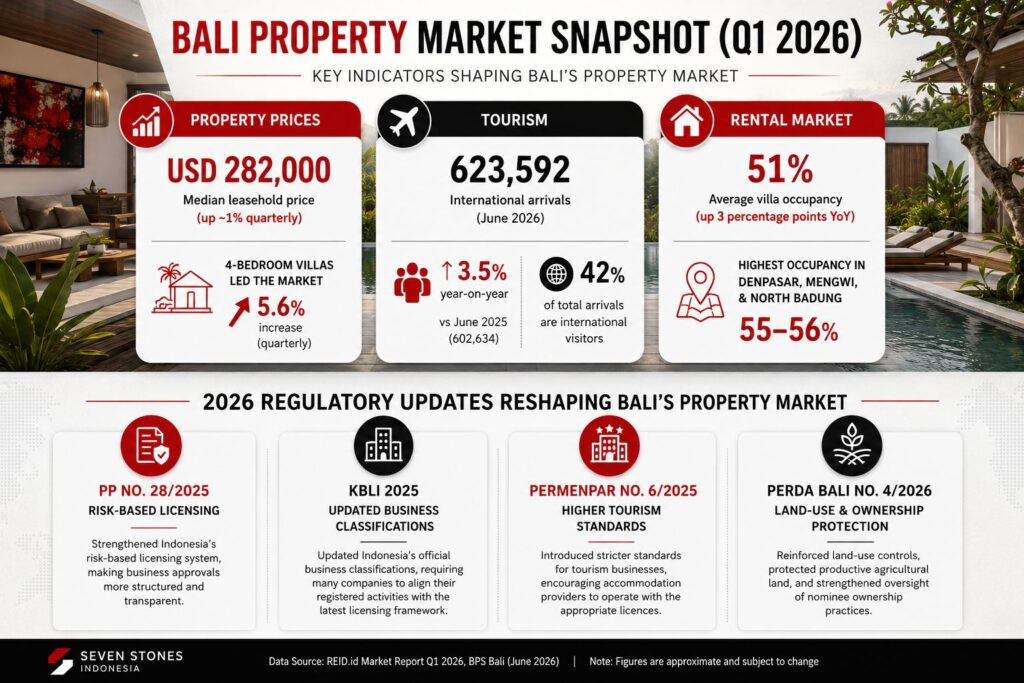
▪️ Rising Leasehold Prices: According to the REID.id report, the median leasehold price reached USD 282,000 (up ~1% quarterly). Larger 4-bedroom villas led the market with a 5.6% increase.
▪️ Tourism-Driven Support: International visitors accounted for 42% of total arrivals following a record recovery year. This momentum has carried straight in June 2026, which saw 623,592 foreign arrivals—a 3.5% year-on-year increase compared to June 2025 (602,634), keeping rental demand hot.
▪️ Strong Rental Demand: Average villa occupancy hit 51% (up 3% year-on-year), peaking at 55–56% in Denpasar, Mengwi, and North Badung—a highly impressive performance for a traditionally quieter quarter.
Taken together, these figures suggest that Bali’s property market is entering a more balanced phase. Demand remains healthy, prices continue to grow steadily, and occupancy levels are holding despite increasing competition, all encouraging signs for investors taking a long-term view.
Why Stricter Regulations Strengthen Bali’s Property Market
Recently, several important regulatory changes have begun reshaping Bali’s investment and property market. As a result, investors need to pay closer attention to compliance, but they also benefit from greater legal certainty and higher-quality developments.
Some of the most significant regulatory developments include:
▪️ Government Regulation/PP No. 28/2025 strengthened Indonesia’s risk-based licensing system, making business approvals more structured and transparent.
▪️ KBLI 2025 updated Indonesia’s official business classifications, requiring many companies to align their registered activities with the latest licensing framework.
▪️ Minister of Tourism Regulation/Permenpar No. 6/2025 introduced stricter standards for tourism businesses, encouraging accommodation providers to operate with the appropriate licences.
▪️ Bali Regional Regulation/Perda No. 4/2026 reinforced land-use controls, protected productive agricultural land, and strengthened oversight of nominee ownership practices.
Together, these regulations aren’t designed to discourage investment. Instead, they help create a healthier property market. Legally compliant developments can compete more fairly and investors have greater confidence in their businesses.
What Today’s Market Means for Anyone Buying Property in Bali
The latest market data shows that demand remains healthy, but at the first glance, stricter regulations may seem like another obstacle for foreign investors.
In reality, many of these changes are designed to improve the overall quality of Bali’s property market rather than discourage investment. For buyers, that brings several long-term advantages:
☑ Greater legal certainty, as licensing and approval processes become more consistent under Indonesia’s risk-based framework.
☑ Clearer zoning guidance, making it easier to identify areas suitable for residential, tourism, or commercial development.
☑ Lower risk of purchasing problematic properties, as stronger enforcement encourages developers and business operators to meet regulatory requirements.
☑ Healthier investment market, where compliant projects are better positioned for long-term growth than developments relying on legal shortcuts.
So, Is Now a Good Time to Buy Property in Bali?
Based on the latest Q1 2026 market indicators, Bali continues to present attractive opportunities for long-term property investors. Property prices remain stable, rental demand remains healthy, and tourism continues to support the market.
At the same time, stronger regulations are encouraging higher-quality developments and providing greater legal certainty for buyers.
For investors who focus on long-term value rather than short-term speculation, 2026 may be one of the strongest times to buy property in Bali.
Making the most of those opportunities, however, starts with choosing the right property and understanding the regulations that apply to your investment.
Seven Stones Indonesia helps foreign investors identify quality properties, manage transactions, and navigate Indonesia’s legal framework, so every investment is built on both commercial potential and regulatory compliance.
Whether you’re buying your first villa or expanding an existing portfolio, get in touch with our real estate consultants today to discuss your initial business plan.