

Business Standards and Administrative Sanctions Introduced for Housing and Shopping Center Developers
Infrastructure and Construction Services
Overview
Following the issuance of Government Regulation No. 28 of 2025 on Risk-Based Business Licensing (PBBR), the Minister of Housing and Settlement Areas has introduced Ministerial Regulation No. 18 of 2025 on Business Activity Standards, Supervision, and Administrative Sanctions in the Housing Sector (“Regulation 18/2025”).
In force since 31 December 2025, Regulation 18/2025 establishes a mandatory compliance framework for housing and shopping-center developers, linking licensing, spatial conformity, reporting, and supervision directly to the right to construct and operate.
The message is clear: no compliance, no construction. This article highlights three core aspects of the new framework:
1. Scope of applicability
2. Business standards and obligations
3. Supervision and administrative sanctions
1. Scope of Applicability: Who Is Covered?
Regulation 18/2025 applies to housing-sector business actors operating under Indonesia’s risk-based licensing regime (PBBR). Businesses are categorized by scale—micro, small, medium, and large enterprises—in line with prevailing laws.
Relevant KBLI Coverage
The regulation applies primarily to real-estate activities previously grouped under KBLI 68111, now reclassified under the 2025 KBLI framework, including:
⮕ KBLI 68111 – Residential building and land development
⮕ KBLI 68112 – Leasing and operation of residential buildings and land
⮕ KBLI 68125 – Shopping-center management
Covered Business Activities
Regulated activities include:
• Development of residential housing and mixed-use housing
• Housing projects for low-income communities (MBR) and regular housing
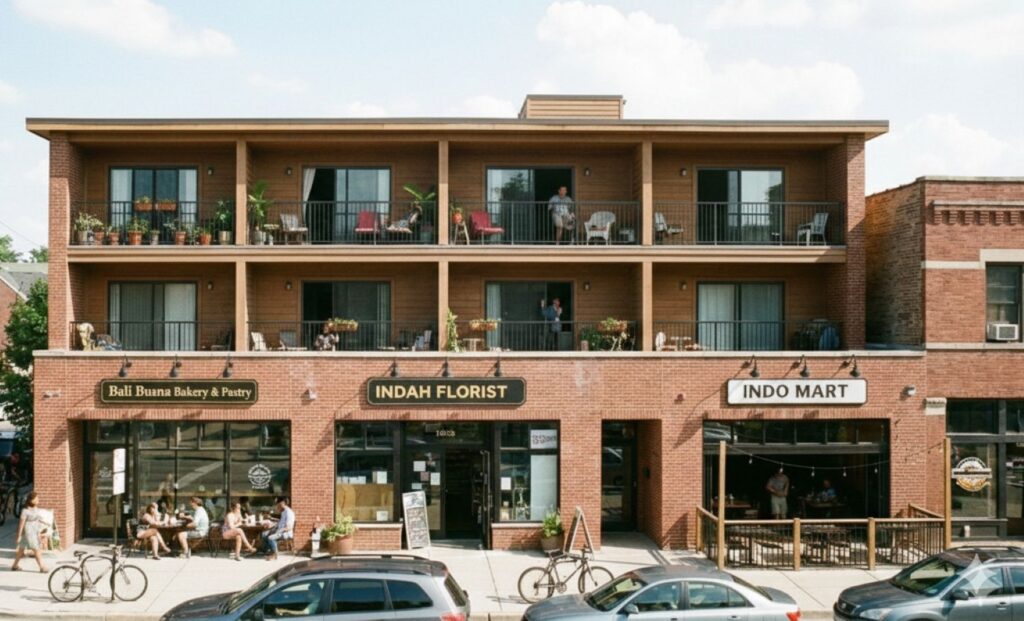
• Development and/or operation of shopping centers (malls, plazas, food courts, rest areas)
• Mixed-use real-estate developments combining residential and commercial elements
2. Business Standards and Mandatory Obligations
Housing-sector businesses are classified as medium-low risk, meaning licensing is facilitated via the OSS system, but post-licensing obligations are extensive.
Core Obligations
Developers must now:
1. Secure Spatial Conformity (KKPR)
Approval must be obtained for the intended use of space prior to development.
2. Obtain Written Regional Government Approval, covering:
- Master plan and site plan
- Plot-based and/or apartment-unit-based subdivision
- Apartment-unit delineation plans
3. Submit Mandatory Reports, including:
- Audited financial statements
- Cash-flow projections and financial viability analysis
- Reports on binding sale-and-purchase agreements
4. Fulfill Investment Activity Reporting, covering:
- Investment realization
- Workforce realization
- Production realization
Only after these obligations are fulfilled will regional governments issue formal approval decisions through the OSS “fulfillment-of-commitments” mechanism.
3. Supervision and Administrative Sanctions
Government Supervision
Regulation 18/2025 introduces dual-level supervision (central and regional), conducted through:
- Routine supervision (report reviews, compliance verification, and field inspections)
- Incidental supervision. Triggered by public complaints, investor disputes, or suspected non-compliance with fundamental requirements
Administrative Sanctions
Non-compliance may result in progressive or immediate sanctions, including:
- Written warnings
- Temporary suspension of business activities
- Suspension of business licenses
- Revocation of business licenses
For developers, the operational risk is substantial: licensing failure can halt construction, sales, and operations entirely.
Key Takeaways
⮕ Regulation 18/2025 transforms housing development into a compliance-first sector
⮕ Licensing alone is no longer sufficient—ongoing reporting and supervision are central
⮕ Developers operating without KKPR alignment, audited financials, or OSS reporting face serious enforcement risk
⮕ Shopping centers and mixed-use projects are now explicitly regulated within this framework
How Seven Stones Indonesia Can Assist
Seven Stones Indonesia supports developers, investors, and landowners in navigating Indonesia’s increasingly strict risk-based licensing and housing-sector compliance regime.
Our services include:
➤ KBLI and business-model structuring under the 2025 KBLI framework
➤ OSS and PBBR licensing strategy, including risk classification and fulfillment of commitments
➤ KKPR coordination and zoning alignment, including RDTR/RTRW analysis
➤ Regulatory readiness audits for housing and mixed-use developments
➤ Ongoing compliance monitoring, reporting, and enforcement-risk mitigation
➤ Strategic advisory for foreign-owned (PT PMA) and joint-venture developments
In a regulatory environment where non-compliance now stops construction, early structuring and continuous compliance are no longer optional—they are essential.