

Indonesia has quietly started 2026 with one of its strongest economic signals in years. Q1 GDP growth reached 5.61% year-on-year, the fastest pace in more than three years, according to BPS.
The number exceeded analyst expectations and reinforced a growing narrative that Indonesia is no longer simply surviving global uncertainty – it is increasingly positioning itself as one of Asia’s more stable long-term growth stories.
And perhaps even more interesting for Bali, this economic momentum is now being mirrored by strong tourism performance as well.
According to recent BPS tourism data highlighted in Statistics Indonesia and discussed by Juwai IQI economist Shan Saeed, Indonesia’s tourism sector also showed strong growth in early 2026, supported by rising international arrivals, stronger domestic travel activity, and improving consumer confidence.
Combined with GDP growth, this sends a powerful message to international markets: Indonesia is increasingly being viewed not just as a tourism destination – but as a credible long-term investment environment.
Bali Sits Right in the Middle of This Story
For Bali, this matters enormously. Because Bali has gradually evolved beyond being “just” a holiday island.
Over the last decade, Bali has quietly transformed into something much bigger: a hybrid economy built around tourism, lifestyle migration, wellness, hospitality, remote work, residential living, and increasingly sophisticated investment activity.
People are no longer only coming to Bali for two-week vacations. They are:
▪ Relocating here
▪ Building businesses here
▪ Investing here
▪ Raising families here
▪ Creating long-term operational bases here
And that creates a completely different economic ecosystem. A tourist spends money for a short period. A resident investor creates recurring economic activity for years.
Tourism Growth Builds Confidence Beyond Tourism
One of the biggest misconceptions about tourism is that it only benefits hotels and villas. In reality, tourism growth creates confidence across entire economies. When international arrivals increase, it impacts:
▪ Restaurants
▪ Retail
▪ Construction
▪ Infrastructure
▪ Healthcare
▪ International schools
▪ Logistics
▪ Transportation
▪ Professional services
▪ Real estate
▪ Banking
▪ Digital businesses
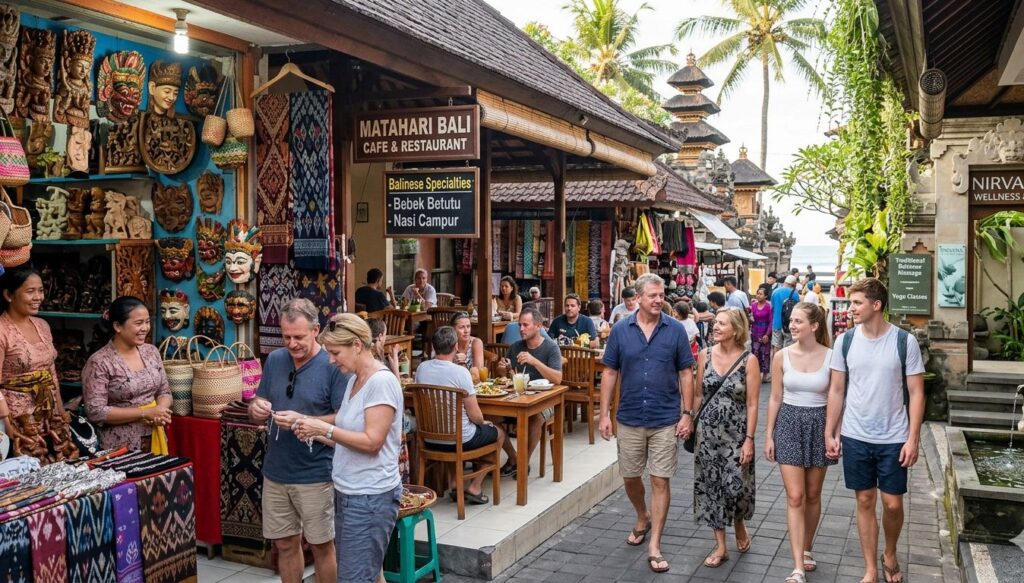
And Bali has become deeply interconnected with all of these sectors. The recent tourism growth figures therefore matter not only because more tourists are arriving, but because they reinforce a broader perception internationally that Indonesia – and Bali specifically – remain highly attractive destinations despite global uncertainty.
Indonesia Is Starting to Feel “Investable” at Scale
For many years, Indonesia was often described as “high potential, high complexity.” That perception still exists to some extent. And honestly, some of it is fair.
Indonesia is not Singapore. It is not Dubai. It is not a perfectly streamlined environment. But investors today are increasingly seeing something else:
▪ A massive domestic market
▪ Strong consumption
▪ Political stability
▪ Infrastructure expansion
▪ Downstream industrial growth
▪ Strong demographic trends
▪ Expanding tourism
▪ Increasing policy consistency
That combination is powerful. Especially in a world where many developed economies are slowing down or struggling with debt, aging populations, and political fragmentation.
As Shan Saeed described it, Indonesia is increasingly “compounding credibility into a priced macro asset.” That is exactly the type of language institutional investors pay attention to.
Bali’s Next Phase May Be More Structured
Interestingly, Bali’s own evolution also mirrors what is happening nationally. For years, Bali operated with a certain looseness:
▪ Easy money
▪ Fast developments
▪ Informal operational structures
▪ Limited enforcement
▪ Speculative projects
That phase is gradually changing. Today we see:
▪ Stronger OTA compliance enforcement
▪ Increased zoning focus
▪ More attention on licensing
▪ Greater tax scrutiny
▪ More institutional involvement
▪ Growing ESG and sustainability discussions
▪ Better investor due diligence
And while some market players feel uncomfortable with these changes, long-term investors often see them positively. Because mature capital generally prefers structured markets.
The reality is: The next generation of serious investment into Bali will likely not flow into the least regulated projects. It will increasingly flow toward:
▪ Properly structured developments
▪ Sustainable projects
▪ Legally compliant operations
▪ Professional management
▪ Community-integrated concepts
▪ Long-term asset strategies
In many ways: “Structure is becoming the new luxury.”
Bali Benefits From Indonesia’s Macro Reputation
Macro reputation matters. When global headlines consistently show:
▪ Strong GDP growth
▪ Expanding tourism
▪ Stable consumption
▪ Resilient domestic demand
▪ Government investment
▪ Infrastructure spending
It changes international perception. And perception drives capital allocation. Many investors who previously saw Indonesia as “too difficult” are now starting to see it as: “complex, but increasingly worth the effort.”
That psychological shift is extremely important. Because investment decisions are rarely driven by numbers alone. They are driven by confidence.
Challenges Still Exist — Of Course
None of this means Bali has solved all its problems. Infrastructure still needs acceleration. Waste management remains critical. Traffic frustrations are real. Regulatory communication can improve significantly.
Certain areas clearly face overdevelopment pressure. But interestingly, these challenges are now increasingly being discussed openly by both government and private sector stakeholders – and more importantly, investment is starting to move toward solutions.
Recent momentum around:
▪ Waste-to-energy initiatives
▪ Road infrastructure
▪ Tourism restructuring
▪ Investment reforms
▪ Sustainability projects
▪ Regional development
suggests Indonesia understands that maintaining investor trust requires continuous improvement, not complacency.
Final Thoughts
Indonesia’s strong start to 2026 is not just a good quarter. It may represent a deeper shift in how global markets now view the country.
A large domestic economy. Strong tourism momentum. Policy-driven growth. Expanding infrastructure. Increasing institutional credibility.
And Bali sits directly inside that momentum. But the Bali story itself is also evolving. The next phase may not belong to whoever builds fastest or markets the loudest.
It may belong to those who understand structure, sustainability, operational reality, and long-term trust. Because Bali is no longer just a tourism story. It is increasingly becoming part of Indonesia’s larger investment credibility story.